Apstra DC-Fabric under the Hood - Part 2: Overlay
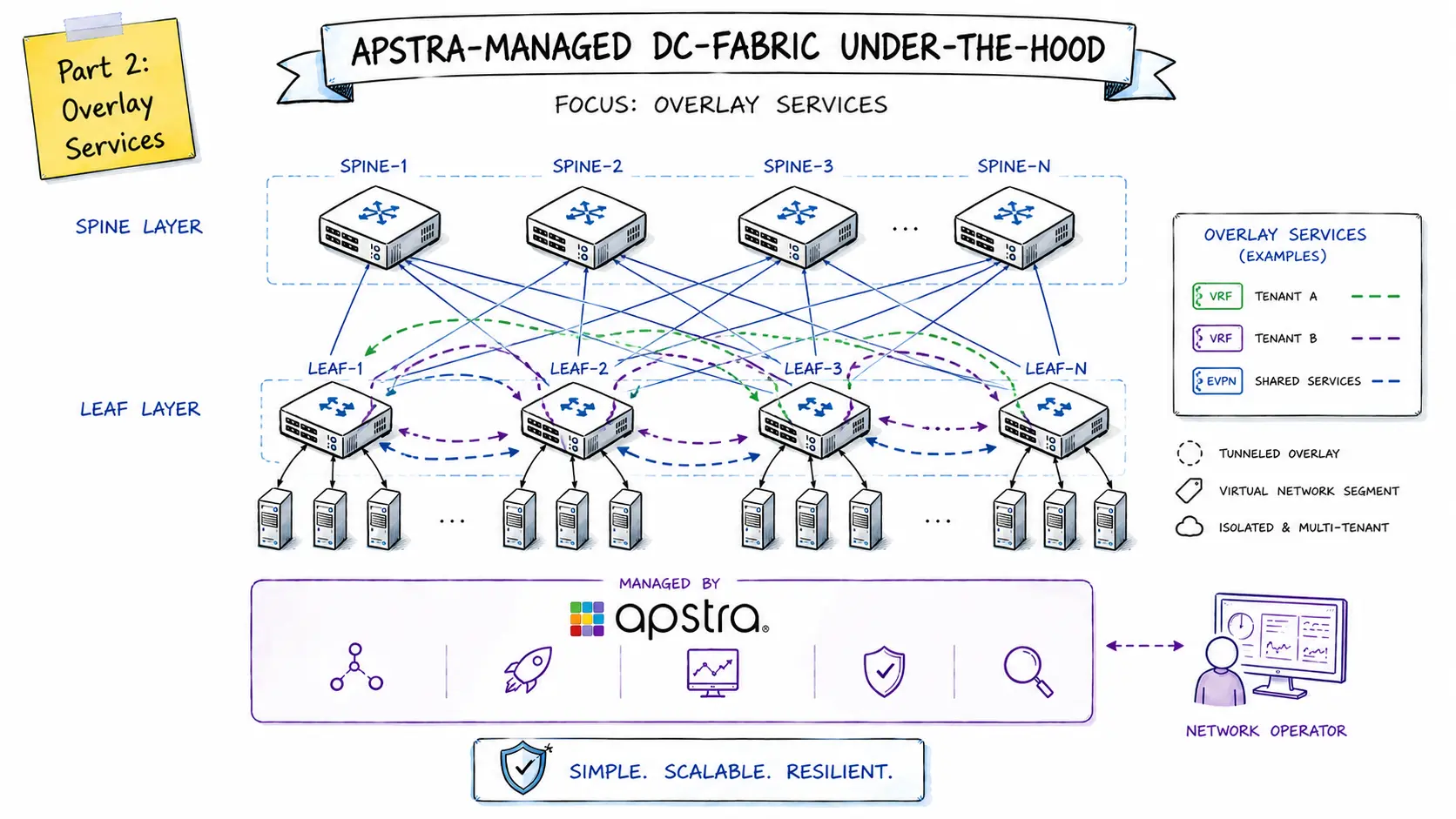
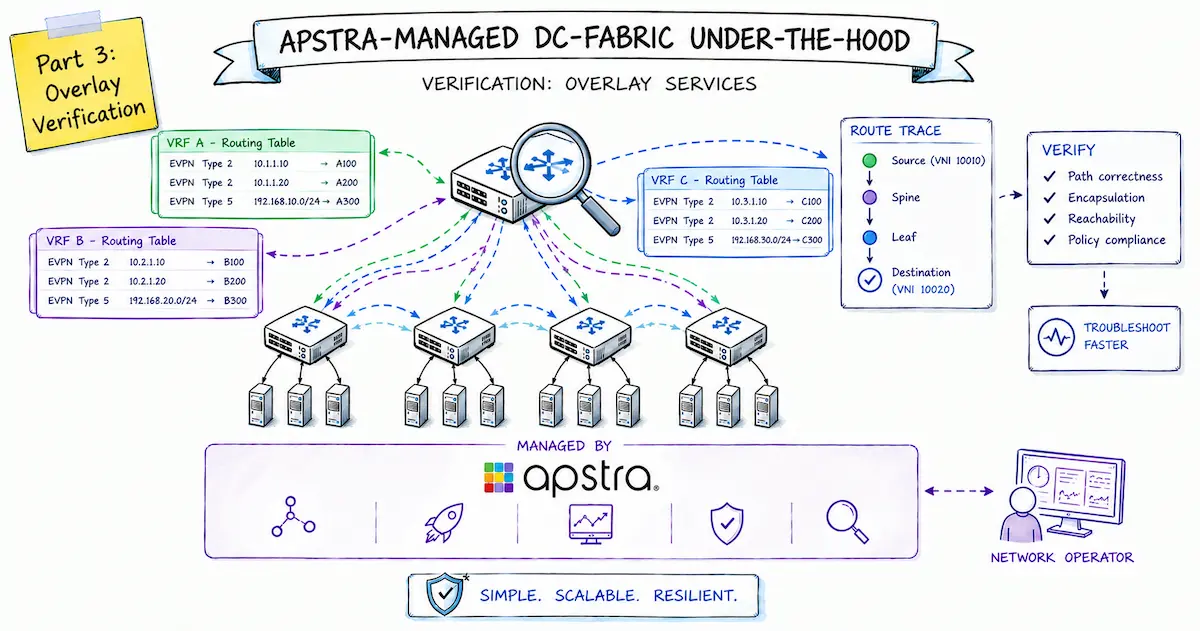
How does Apstra turn EVPN, VXLAN, and IRB routing into real Junos configuration? This deep dive breaks down tenants, VNIs, and host attachment to show how the overlay truly works under the hood.

How does Apstra turn EVPN, VXLAN, and IRB routing into real Junos configuration? This deep dive breaks down tenants, VNIs, and host attachment to show how the overlay truly works under the hood.

Apstra abstracts a lot – but those who truly understand DC fabrics look under the hood. This post dissects the underlay design of a Juniper 3-stage Clos fabric: from IP addressing to eBGP with individual spine ASNs and the BGP policies that prevent routing loops.

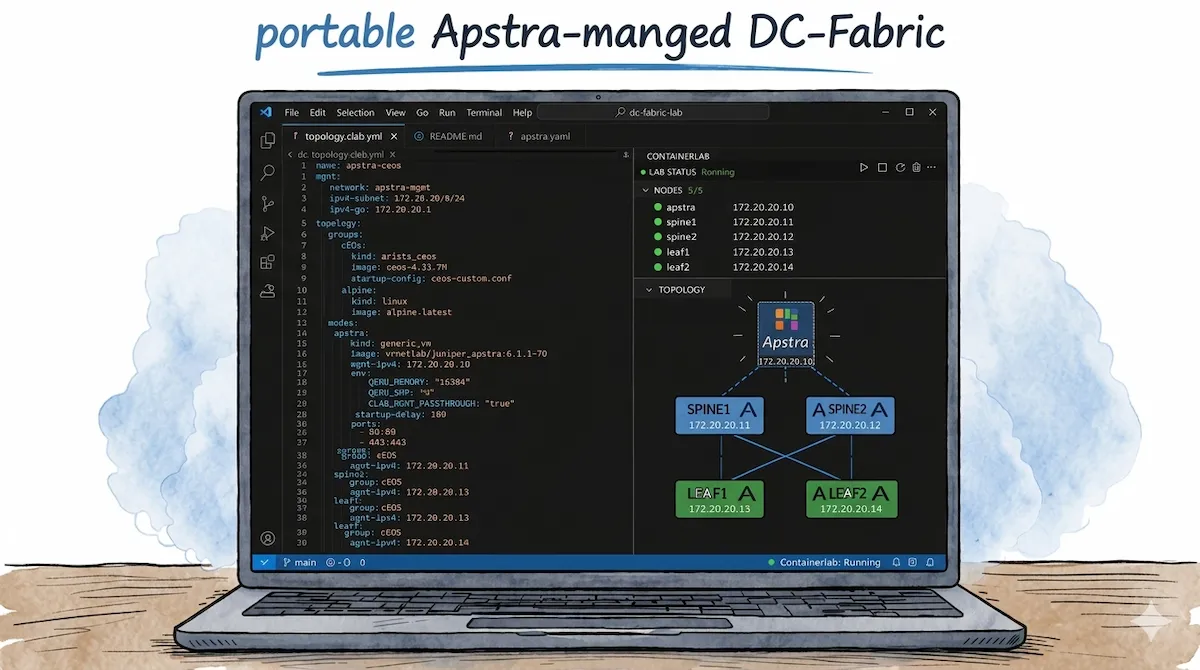
Running Apstra as a managed DC controller directly inside a Containerlab topology is possible – but getting there requires a custom vrnetlab build and a few tricks. This post walks through the whole process, ending with a fully Apstra-managed EVPN/VXLAN fabric running across four Arista cEOS nodes on a Windows laptop.

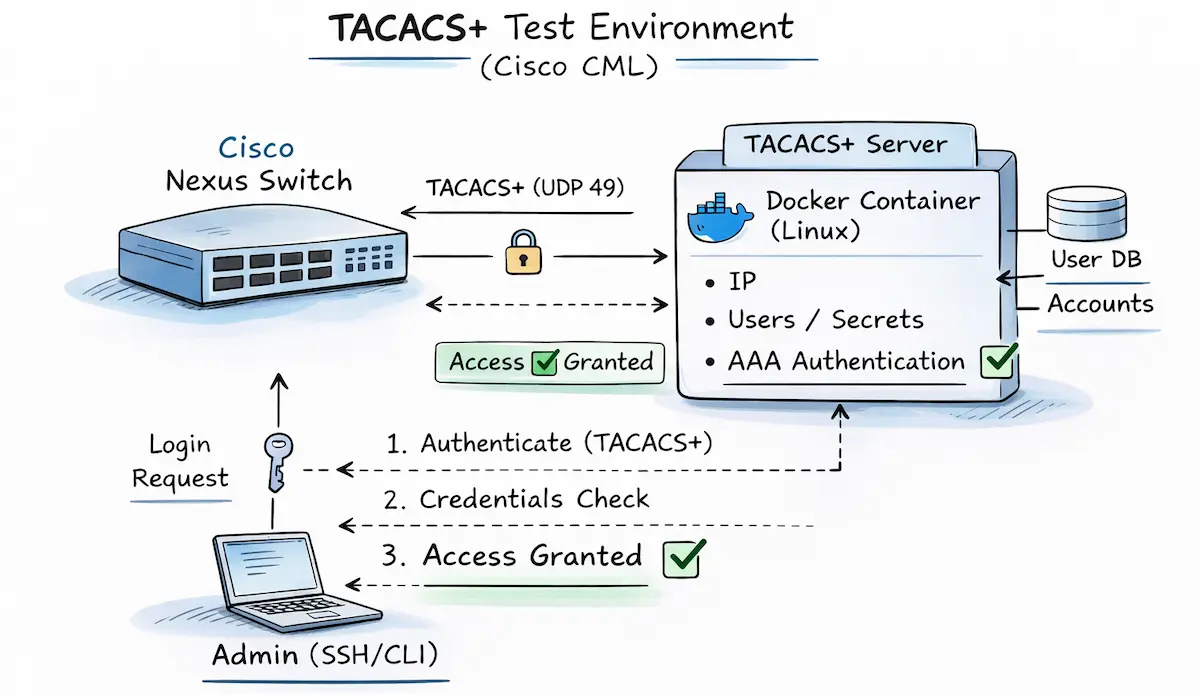
Instead of a resource-hungry Cisco ISE, a lean tac_plus container in CML 2.9 is all you need to fully test TACACS+ authentication for Cisco Nexus. Discover which small NX-OS command makes all the difference – and why PAP becomes an unexpected roadblock.

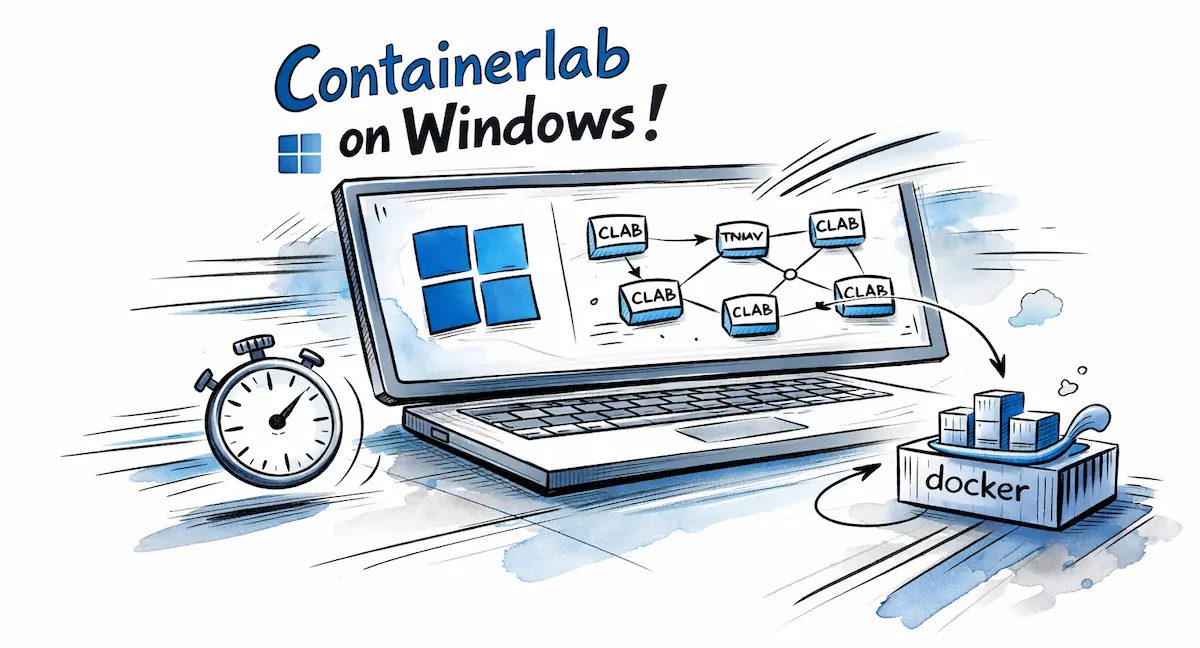
No dedicated server, no EVE-ng, no waiting for colleagues – Containerlab brings your network labs straight to your Windows laptop. This post walks you through the setup step by step using a simple Arista cEOS lab.